
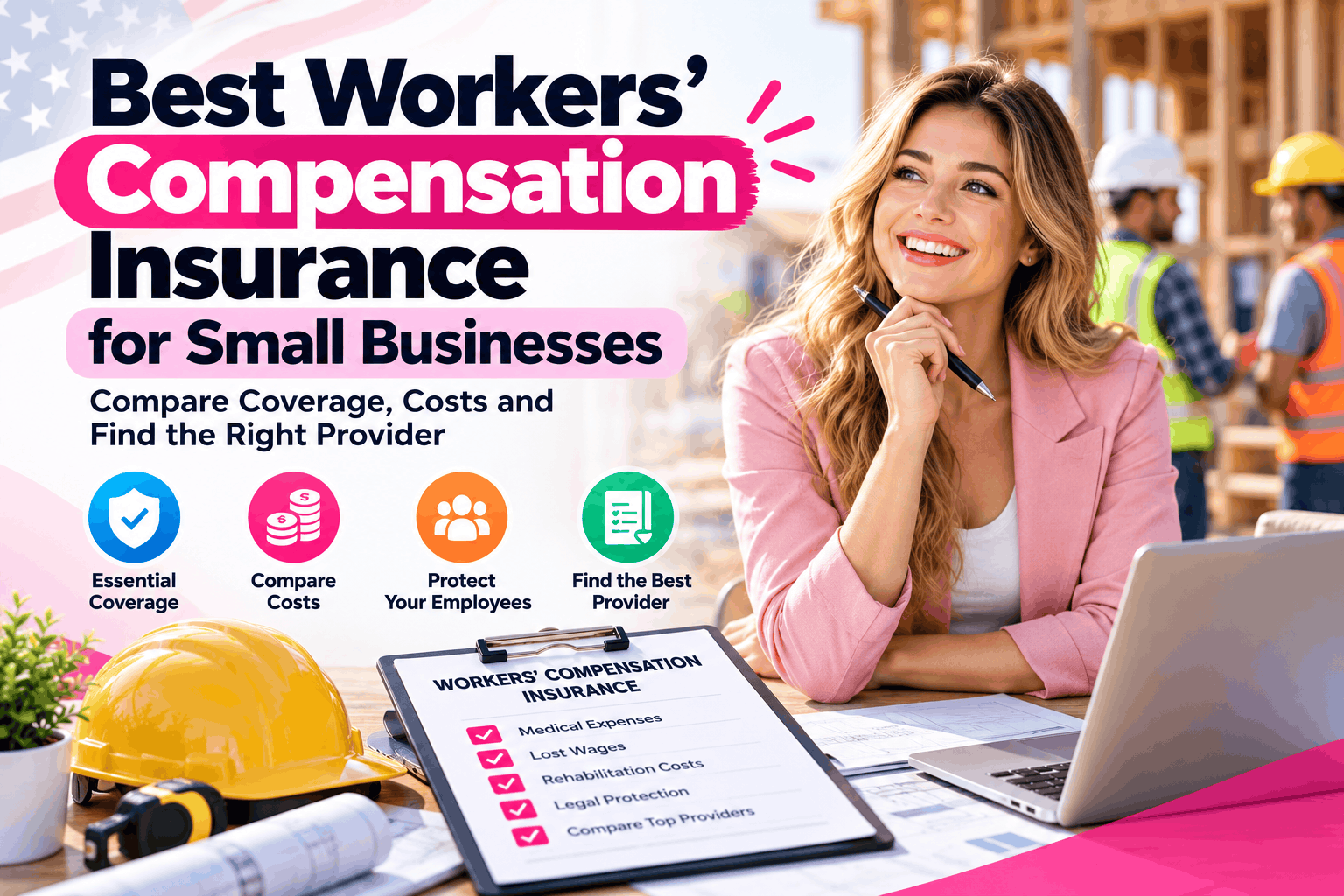
Running a small business means managing employees, customers, expenses, and unexpected challenges. An employee injury can create another serious concern, particularly when medical bills and lost wages enter the picture.
Workers’ compensation insurance helps businesses manage certain costs associated with work-related employee injuries and illnesses. Depending on state law and policy terms, it can cover medical treatment, rehabilitation, and part of an injured employee’s lost wages.
However, choosing the right policy takes more than finding the lowest premium. Business owners need to understand their legal obligations, compare insurers, and select coverage that suits their operations.
This guide explores workers’ compensation insurance providers, coverage, costs, and practical ways to compare policies.
What Is Workers’ Compensation Insurance?
Workers’ compensation insurance provides benefits to eligible employees who experience work-related injuries or illnesses.
For example, an employee working in a warehouse might injure their back while lifting equipment. Workers’ compensation may help pay for covered medical treatment and provide wage-replacement benefits under applicable state rules.
Coverage can also apply to certain occupational illnesses that develop over time.
In exchange for these benefits, workers’ compensation laws generally establish rules governing claims and lawsuits involving workplace injuries. The legal framework varies by state.
The National Association of Insurance Commissioners (NAIC) explains the purpose of workers’ compensation and the importance of checking your state’s requirements.
Best Workers’ Compensation Insurance Providers to Compare
Several established insurance companies offer workers’ compensation coverage to eligible businesses. Availability, pricing, and policy options depend on the state and type of business.
Here are five providers worth considering.
1. The Hartford
The Hartford offers workers’ compensation insurance alongside other business insurance products.
Depending on your business and location, you can explore coverage options and resources for managing workplace injuries and claims.
Small business owners should ask about claims support, payment arrangements, premium calculations, and available risk-management resources.
Consider it if: You want to compare workers’ compensation with other business insurance options from an established provider.
Official website: The Hartford Business Insurance
2. Travelers
Travelers provides workers’ compensation insurance and risk-management services for businesses.
Its offerings may be relevant to companies looking for support with workplace safety, injury management, and insurance planning.
Ask about coverage availability for your industry, claims procedures, and resources that may help reduce workplace risks.
Consider it if: Workplace safety and risk-management support are important to your business.
Official website: Travelers Business Insurance
3. NEXT Insurance
NEXT Insurance offers business insurance products through digital purchasing and policy-management tools.
Small business owners can investigate whether workers’ compensation coverage is available for their industry and state.
Before purchasing, review the policy details, eligibility requirements, and support options.
Consider it if: You prefer an online insurance experience and want to compare digital policy-management options.
Official website: NEXT Insurance
4. Progressive Commercial
Progressive Commercial offers workers’ compensation coverage through its business insurance offerings and insurance partners, depending on the product and location.
Business owners should confirm which company will underwrite their policy, who will handle claims, and whether coverage is available in their state.
Consider it if: You want to explore workers’ compensation alongside other commercial insurance needs.
Official website: Progressive Commercial
5. biBerk
biBerk offers business insurance products, including workers’ compensation coverage for eligible businesses.
Its online tools allow business owners to explore coverage and manage insurance-related tasks.
Check the availability of workers’ compensation for your location and industry, and compare its quote with other licensed providers.
Consider it if: You want to investigate online purchasing options for small business insurance.
Official website: biBerk
Which Provider Should You Choose?
There is no single workers’ compensation insurer that suits every small business.
A construction company faces different workplace risks from a marketing agency. Likewise, a business with several employees may have different insurance needs from a company with a larger payroll.
Compare actual quotes, state availability, claims support, policy terms, and risk-management services before making your decision.
What Does Workers’ Compensation Insurance Cover?
Workers’ compensation benefits vary by state, but common coverage areas include the following.
Medical Expenses
Coverage generally helps pay eligible medical expenses related to a work-related injury or illness, subject to applicable rules.
These expenses may include doctor visits, hospital treatment, prescription medication, and other approved medical care.
Lost Wages
An employee who cannot work because of a qualifying injury may receive wage-replacement benefits.
The amount and duration depend on state law, the employee’s circumstances, and the applicable benefit rules.
Rehabilitation Services
Some claims qualify for rehabilitation services that help injured employees recover and return to work when possible.
These services may include physical rehabilitation and certain vocational assistance, depending on the circumstances.
Disability Benefits
Qualifying injuries may result in temporary or permanent disability benefits under state workers’ compensation rules.
The applicable benefits depend on the injury, its impact on the employee, and the state’s legal framework.
Death Benefits
If an employee dies because of a qualifying workplace injury or illness, workers’ compensation may provide eligible surviving dependents with benefits and help cover certain funeral expenses.
For further guidance, consult the Insurance Information Institute’s workers’ compensation overview.
How Much Does Workers’ Compensation Insurance Cost?
Workers’ compensation premiums vary significantly between businesses. Insurers typically consider factors such as payroll, employee job classifications, industry risks, claims history, and location.
A business employing office administrators may receive a different quote from a construction company with employees working at heights.
The number of employees and their wages can also influence the premium because insurers use payroll information when calculating many workers’ compensation policies.
To compare costs effectively:
- Request quotes from multiple licensed insurers.
- Provide accurate payroll estimates and job descriptions.
- Confirm the classification assigned to each type of work.
- Review payment terms and any fees.
- Ask how claims history may affect future premiums.
- Check whether workplace safety programs could help reduce costs.
Avoid choosing a policy based on an advertised starting price alone. Your actual premium depends on your business circumstances and the insurer’s rating methods.
Is Workers’ Compensation Insurance Required by Law?
In most U.S. states, employers must provide workers’ compensation coverage when they meet the applicable legal requirements.
However, the rules differ by state, industry, business structure, and employee count. Some states have exceptions for particular owners or business arrangements.
Texas has a different system from most states, and employers should understand the legal consequences of operating without coverage.
Certain states also require businesses to purchase coverage through a state-administered insurance fund rather than a private insurer.
Before hiring employees, consult your state workers’ compensation agency or insurance department. Do not assume that having only one employee, using part-time workers, or hiring independent contractors automatically exempts your business.
The NAIC small business insurance guide provides a useful starting point for understanding these obligations.
How to Choose the Right Workers’ Compensation Policy
Start by identifying your business activities and employee roles. Accurate job descriptions help insurers classify your workforce appropriately.
Next, determine which state requirements apply to your business. If employees work in multiple states, confirm that your policy addresses those locations.
Request comparable quotes from several insurers and review their claims procedures, payment options, and customer support.
Ask whether the insurer provides workplace safety resources or return-to-work assistance. These services may help you manage injuries and support employees during recovery.
Finally, review your payroll and staffing information regularly. Hiring new employees, changing job duties, or expanding into another state can affect your coverage requirements and premiums.
Common Mistakes Small Businesses Should Avoid
Choosing the cheapest policy: A low premium does not guarantee that the insurer meets your legal requirements or offers suitable service.
Misclassifying employees: Incorrect job classifications or payroll figures can affect premium calculations and create problems during an audit.
Assuming contractors are automatically exempt: State laws determine how workers are classified for workers’ compensation purposes. Some arrangements may create unexpected responsibilities.
Ignoring state requirements: Missing required coverage can lead to penalties and financial exposure.
Forgetting policy reviews: Changes in payroll, staffing, and business operations may require updates to your insurance.
Taking time to check these details can help your business maintain appropriate coverage.
Final Thoughts
Choosing the best workers’ compensation insurance for small businesses requires balancing coverage, costs, claims support, and legal compliance.
Start by comparing The Hartford, Travelers, NEXT Insurance, Progressive Commercial, biBerk, and other licensed providers available in your state.
Review the actual policy terms, confirm how the insurer handles claims, and provide accurate payroll and employee information.
Most importantly, understand your state’s requirements before hiring workers or expanding your operations.
The right workers’ compensation policy helps protect employees while giving your business a clearer plan for handling workplace injuries and related expenses.
