
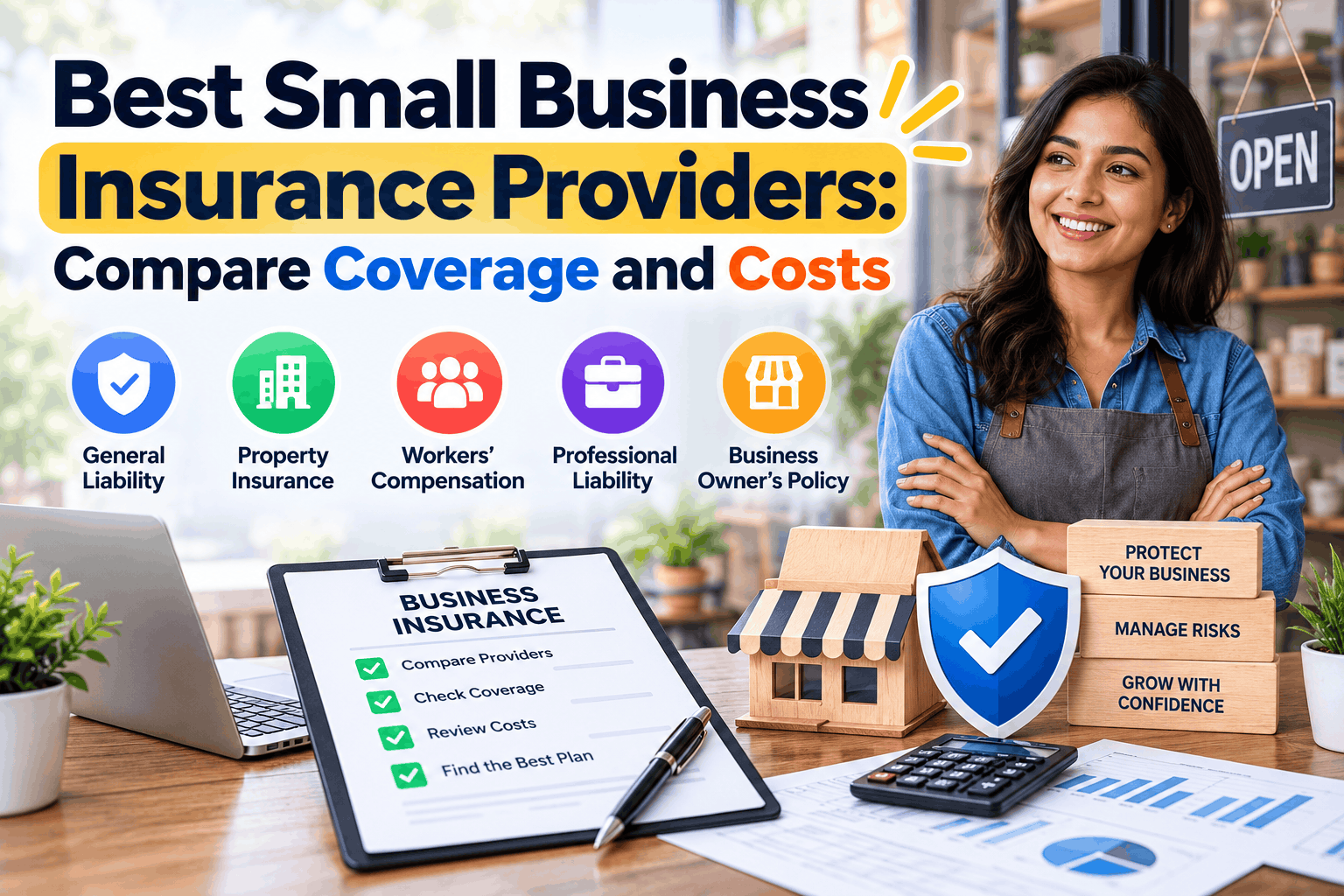
Running a small business takes hard work, careful planning, and a little patience. Whether you operate an online store, manage a consulting firm, or work as an independent contractor, protecting your business matters just as much as growing it.
An unexpected property loss, customer injury, or professional liability claim can create significant financial pressure. Small business insurance helps eligible businesses manage certain risks, depending on the policy’s coverage, limits, and exclusions.
But which insurance company should you choose? And how much coverage do you actually need?
This guide compares small business insurance providers, explains common coverage options, and explores the factors that affect costs so you can make an informed decision.
What Is Small Business Insurance?
Small business insurance refers to policies that help protect businesses against specific financial risks. Depending on the policy, coverage may include customer injuries, property damage, professional mistakes, employee injuries, or certain cyber incidents.
The right policy depends on your industry, business structure, location, revenue, employees, and contractual obligations.
For example, a freelance designer may need professional liability insurance, while a retail store may need protection for its inventory, equipment, and premises.
The U.S. Small Business Administration provides helpful guidance on choosing business insurance.
Best Small Business Insurance Providers to Compare
Several established insurers offer business insurance for different industries and business sizes. The following companies provide useful starting points for your research, but availability and policy options vary by state.
1. The Hartford
The Hartford offers business insurance options for small companies, including general liability, commercial property, workers’ compensation, and business owner’s policies.
Business owners can explore coverage suited to their industry and consider how their insurance needs may change as the company grows.
Consider it if: You want to compare multiple business coverage options from an established insurer.
Official website: The Hartford
2. Hiscox
Hiscox specializes in business insurance and offers coverage options for professional services, consultants, and other small businesses.
Depending on your occupation and eligibility, you can explore professional liability, general liability, and other relevant protections.
Consider it if: You operate a consulting business, provide professional services, or work independently.
Official website: Hiscox Business Insurance
3. Progressive Commercial
Progressive Commercial provides insurance for business vehicles and other commercial insurance needs.
Companies that use cars, vans, trucks, or specialized vehicles for business purposes should compare its available commercial auto coverage with other suitable options.
Consider it if: Your business depends on vehicles for deliveries, transportation, or daily operations.
Official website: Progressive Commercial
4. Nationwide
Nationwide offers business insurance options for eligible companies across various industries.
Depending on your business, you can investigate liability, commercial property, commercial auto, and other coverage options.
Consider it if: You want to compare several types of business insurance through an established provider.
Official website: Nationwide Business Insurance
5. NEXT Insurance
NEXT Insurance provides digital tools for business owners seeking insurance quotes and policy management online.
Available products and eligibility depend on your business type and location. Review the policy details carefully before purchasing.
Consider it if: You prefer an online insurance process and want to investigate coverage for a small service business or contracting operation.
Official website: NEXT Insurance
Which provider is best?
No single insurer is the right choice for every business. Compare the companies based on your coverage requirements, actual quotes, customer service, policy exclusions, and availability in your state.
Types of Small Business Insurance You May Need
Understanding the main coverage types makes it easier to compare insurance policies.
General Liability Insurance
General liability insurance generally covers certain third-party bodily injury, property damage, and personal or advertising injury claims, subject to the policy terms.
For example, it may help cover an eligible claim if a customer slips and falls at your business premises.
Professional Liability Insurance
Professional liability insurance, also called errors and omissions insurance, can help cover certain claims involving professional services, mistakes, negligence, or failure to deliver services as agreed.
Consultants, accountants, designers, and technology professionals may want to explore this coverage.
Commercial Property Insurance
Commercial property insurance generally protects covered business property against specified losses.
Depending on the policy, insured property may include equipment, furniture, inventory, and business premises.
Workers’ Compensation Insurance
Workers’ compensation insurance helps cover eligible employee work-related injuries or illnesses. State laws determine many of the requirements, and rules vary by location and business circumstances.
Business Owner’s Policy (BOP)
A business owner’s policy typically combines general liability and commercial property coverage. Some policies also include business interruption or business income coverage.
A BOP can simplify insurance purchasing, but it does not automatically cover every business risk.
Cyber Liability Insurance
Cyber liability insurance can help address certain financial losses associated with covered cyber incidents, data breaches, or other digital risks.
Businesses that store customer information or depend on online systems should examine their cyber exposure and available coverage.
The National Association of Insurance Commissioners provides additional information about business insurance and coverage considerations.
How Much Does Small Business Insurance Cost?
Small business insurance costs vary considerably. Your premium depends on your industry, location, annual revenue, employee count, claims history, coverage limits, and deductible.
The type of work you perform also matters. A consultant working remotely may face different risks from a contractor operating heavy equipment.
Rather than relying on a single advertised price, request personalized quotes from multiple insurers.
When comparing prices, examine:
- Annual and monthly premiums.
- Coverage limits and deductibles.
- Policy exclusions and additional endorsements.
- Payment fees and available discounts.
- Any coverage required by clients, landlords, or contracts.
A lower premium may offer good value, but only if the policy protects against the risks that matter to your business.
How to Choose the Right Business Insurance
Start by identifying the risks your company faces. Consider whether you work with customers on-site, store inventory, employ staff, provide professional advice, or handle sensitive customer information.
Next, determine which coverage types address those risks. Check state insurance requirements and review any insurance obligations in your business contracts.
Request quotes from at least three suitable providers. Give each insurer consistent information and compare equivalent coverage limits wherever possible.
Before purchasing, read the policy documents and ask questions about exclusions, deductibles, claims procedures, and coverage limits.
Finally, review your insurance annually. Hiring employees, purchasing equipment, expanding services, or increasing revenue may change your coverage needs.
Common Mistakes to Avoid
One common mistake is choosing insurance based entirely on price. A cheaper policy may provide lower limits or exclude important risks.
Another mistake is assuming general liability covers every professional error, employee injury, or cyber incident. Different risks often require separate policies or endorsements.
Business owners should also avoid assuming that personal homeowners or auto insurance automatically covers commercial activities.
If you operate from home, check whether your existing policy covers business equipment, visitors, and business-related liability.
Final Thoughts
Choosing among the best small business insurance providers requires more than finding an affordable premium. You need coverage that reflects your business activities, financial exposure, and legal obligations.
Compare The Hartford, Hiscox, Progressive Commercial, Nationwide, NEXT Insurance, and other eligible providers before making a decision.
Review the actual quotes, confirm the coverage limits, and understand the exclusions. If your business has complex risks, consider speaking with a licensed commercial insurance agent or broker.
The right business insurance policy helps you prepare for unexpected problems without paying for coverage you do not need. Review your risks, compare your options, and choose protection that supports your business as it grows.
