
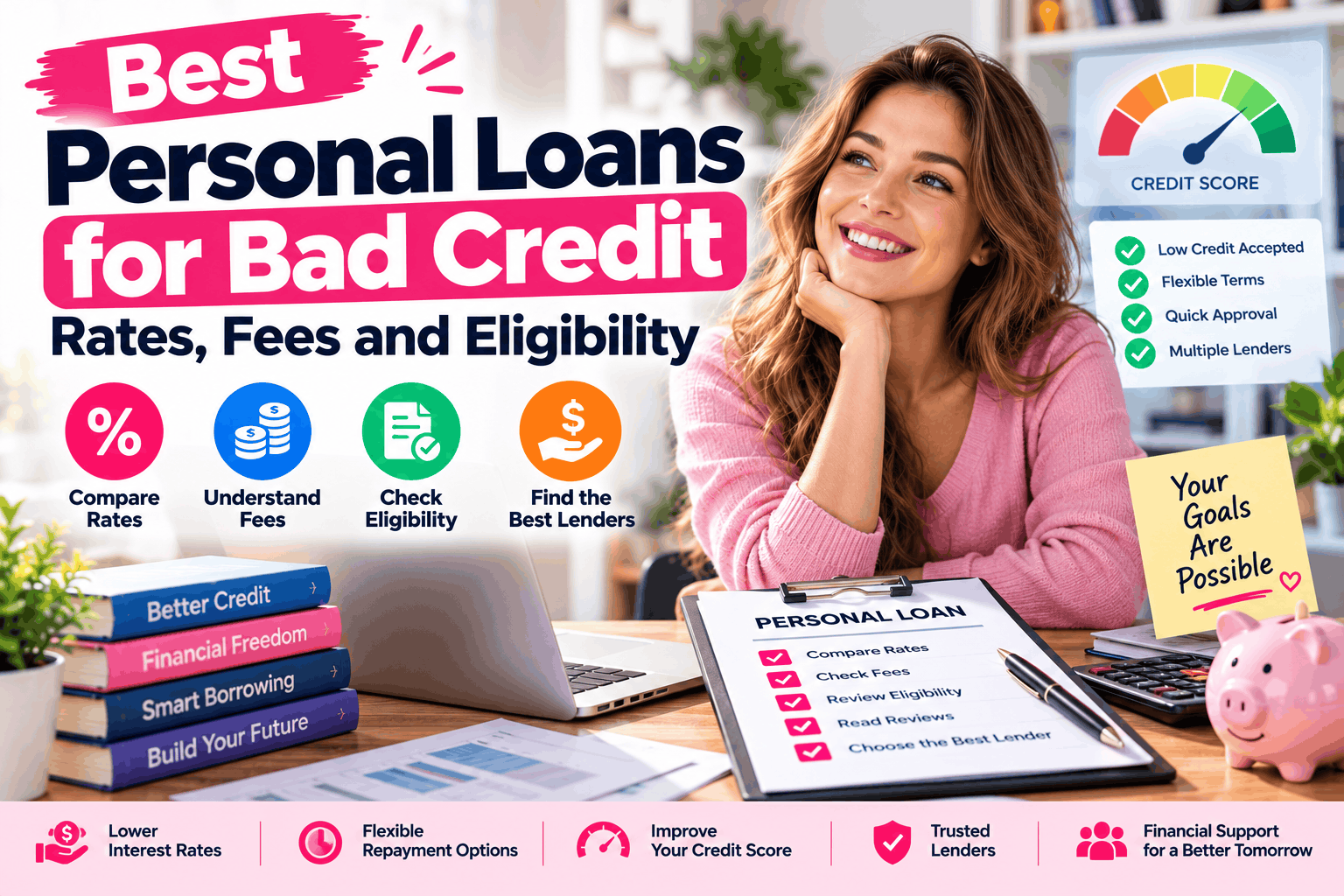
Unexpected expenses can put pressure on any budget. A car repair, medical bill, or urgent household expense may arrive when your savings are already stretched.
If you have a low credit score, borrowing money can become more difficult. Some lenders may reject your application, while others may offer loans with higher interest rates or additional fees.
However, a low credit score does not automatically mean you have no borrowing options.
The key is to compare lenders carefully, understand the total cost of borrowing, and choose a repayment plan that fits your budget.
This guide explores personal loans for bad credit, compares established lenders, and explains interest rates, fees, and eligibility requirements.
What Is a Personal Loan for Bad Credit?
A personal loan for bad credit is a loan that may be available to borrowers with low credit scores or limited credit histories.
Many personal loans provide a lump sum that borrowers repay through scheduled installments. Depending on the lender, you may use the money for eligible expenses such as debt consolidation, home repairs, or unexpected bills.
Some personal loans are unsecured, meaning they do not require collateral. Others are secured by an asset, which can increase the risk to the borrower if they fail to repay.
Lenders consider more than your credit score. They may also evaluate income, existing debt, employment history, and other information when deciding whether to approve an application.
Before borrowing, review the Consumer Financial Protection Bureau’s guidance on personal loans and borrowing.
Best Personal Loan Lenders for Bad Credit
Several lenders offer personal loans to applicants who may not have excellent credit. Availability, interest rates, fees, and eligibility requirements vary.
Here are five providers worth comparing.
1. Upstart
Upstart uses a lending model that considers factors beyond traditional credit scores. Depending on its underwriting criteria, applicants with limited credit histories may have an opportunity to qualify.
Personal loans may be available for eligible expenses such as debt consolidation, home improvement, and unexpected bills.
However, approval is not guaranteed, and the offered interest rate may be high for borrowers with greater perceived risk.
Consider it if: You have limited credit history or want to explore a lender that considers multiple factors in its application process.
Official website: Upstart
2. OneMain Financial
OneMain Financial offers personal loans to borrowers with different credit profiles. Depending on eligibility, applicants may be able to explore unsecured and secured borrowing options.
Some secured loans require collateral, such as a vehicle. This can create additional risk because the lender may have rights to the collateral if the borrower defaults.
Review the interest rate, fees, repayment schedule, and collateral requirements before accepting an offer.
Consider it if: You want to compare loan options that may accommodate less-than-perfect credit.
Official website: OneMain Financial
3. Avant
Avant offers personal loans to eligible borrowers and provides online application tools.
Its products may suit applicants who want to review loan offers and repayment terms through a digital process.
Before applying, confirm the minimum eligibility requirements, applicable fees, and whether the lender offers prequalification without a hard credit inquiry.
Consider it if: You want to investigate an online personal loan with clearly disclosed repayment terms.
Official website: Avant
4. Upgrade
Upgrade offers personal loans with different repayment terms and potential discounts for eligible borrowers.
Depending on the product, applicants may be able to explore options such as automatic-payment discounts or direct payment to creditors for qualifying debt consolidation loans.
Check whether an origination fee applies and whether the final amount deposited into your account will be lower than the amount you borrow.
Consider it if: You want to compare repayment options and potential rate discounts.
Official website: Upgrade
5. Prosper
Prosper offers personal loans to eligible borrowers through its lending platform.
Depending on eligibility and current product availability, applicants may be able to explore loans for debt consolidation, home improvements, and other permitted expenses.
Review the annual percentage rate (APR), origination fee, repayment period, and eligibility requirements before proceeding.
Consider it if: You want another option to compare when reviewing personal loan offers for less-than-perfect credit.
Official website: Prosper
Which lender is best for bad credit?
No lender is the best choice for every borrower. Your credit profile, income, location, loan amount, and repayment capacity influence the offers available to you.
Request preliminary offers from multiple lenders when possible, then compare their total costs rather than focusing only on approval speed.
What Interest Rates Can You Expect?
Personal loan interest rates vary widely. Borrowers with lower credit scores may receive higher rates because lenders generally view them as higher-risk applicants.
Rates also depend on income, existing debt, loan amount, repayment term, and the lender’s underwriting model.
For example, an advertised rate range may start low, but a borrower with poor credit could receive an offer near the upper end.
That is why you should compare the annual percentage rate (APR) rather than looking at the interest rate alone.
APR helps reflect the annual borrowing cost, including certain fees. It provides a more useful comparison between loan offers with different fee structures.
Never assume you will qualify for a lender’s lowest advertised rate. Review your actual offer before making a decision.
Personal Loan Fees You Should Understand
Interest is only one part of borrowing costs. Some lenders charge additional fees that can increase the total amount you pay.
Origination Fees
An origination fee covers certain costs associated with processing and issuing a loan.
Some lenders deduct this fee from the loan proceeds. For example, if you borrow $5,000 and the lender deducts a $250 origination fee, you receive $4,750 but generally must repay the full $5,000 principal under the loan agreement.
Always check how the lender calculates and collects the fee.
Late Payment Fees
A lender may charge a fee if you miss a payment or pay after the applicable deadline, subject to the loan agreement and relevant law.
Set up reminders or automatic payments if they help you pay on time.
Returned Payment Fees
Some lenders charge fees when a scheduled payment fails because of insufficient funds or another payment-processing issue.
Review the agreement for the amount and conditions.
Prepayment Penalties
Some loans may include a charge for paying off the balance early, although many personal loans do not.
Check the contract before signing if you expect to repay the loan ahead of schedule.
Personal Loan Eligibility Requirements
Each lender sets its own eligibility criteria, so requirements can differ.
Common considerations include:
- Credit history and credit score.
- Regular income or another acceptable source of repayment.
- Existing debts and monthly financial obligations.
- Identity and address verification.
- Bank account information.
- State residency and minimum age requirements.
- Loan amount and requested repayment period.
Some lenders consider additional information beyond a traditional credit score. However, this does not guarantee approval or a favorable rate.
Before submitting a formal application, check whether the lender offers prequalification through a soft credit inquiry.
A soft inquiry generally does not affect your credit score, while a hard inquiry may affect it. Confirm the lender’s process before proceeding.
How to Compare Personal Loans for Bad Credit
Follow these steps before accepting a loan.
Step 1: Determine how much you need. Borrow only the amount necessary for your intended expense. A larger loan can mean more interest and a higher monthly payment.
Step 2: Compare multiple lenders. Request preliminary offers where available and review the eligibility conditions.
Step 3: Check the APR. Compare annual borrowing costs rather than focusing only on the advertised interest rate.
Step 4: Review the fees. Identify origination fees, late charges, and other costs that may apply.
Step 5: Compare repayment periods. Longer terms may reduce monthly payments but can increase the total interest paid.
Step 6: Calculate affordability. Make sure the payment fits your budget after housing, food, utilities, and other essential expenses.
Step 7: Read the agreement. Check the total repayment amount, payment schedule, and conditions before signing.
Alternatives to Personal Loans for Bad Credit
A personal loan is not always the most affordable solution.
Depending on your circumstances, consider alternatives before borrowing.
- Credit union loans: Some credit unions offer small-dollar loans or other products to eligible members.
- Payment arrangements: Ask a medical provider or service company whether it offers an installment plan.
- Nonprofit credit counseling: A reputable counselor may help you review your budget and debt repayment options.
- Emergency assistance: Local government programs or nonprofit organizations may provide support for qualifying expenses.
- Savings: If you can cover part of the expense from savings without compromising essential needs, you may be able to borrow less.
Be cautious with payday loans and other high-cost short-term borrowing products. Their fees and repayment schedules can create additional financial pressure.
Common Mistakes to Avoid
Applying everywhere at once: Multiple formal applications can lead to several hard credit inquiries. Compare prequalification options first.
Ignoring origination fees: A loan with a lower advertised interest rate may still cost more after fees.
Choosing the longest repayment term automatically: Lower monthly payments can come with higher total borrowing costs.
Borrowing more than necessary: A larger loan increases your repayment obligations.
Falling for guaranteed approval claims: Legitimate lenders still evaluate applications. Be wary of anyone demanding an upfront payment in exchange for guaranteed approval.
Missing payments: Late payments can lead to fees and may harm your credit history.
Final Thoughts
Finding the best personal loans for bad credit requires careful comparison rather than chasing the fastest approval.
Start by exploring Upstart, OneMain Financial, Avant, Upgrade, and Prosper. Compare actual APRs, origination fees, repayment terms, eligibility criteria, and customer support before choosing a lender.
Consider alternatives if the available offers are too expensive, and never borrow more than you can reasonably repay.
The best loan is not simply the one that approves your application. It is the one whose total cost and repayment schedule fit your financial situation.
